Last Updated: May 2026
DNP Salary 2026: What Doctor of Nursing Practice Nurses Really Earn

Quick Answer
DNP-prepared nurses earn $118,000–$214,000/year in 2026 depending on specialty. DNP-CRNAs are the top earners at $214,000/year. Clinical DNP-NPs earn $5,000–$15,000/year more than MSN-NPs in comparable roles — with the largest premium in leadership and academic positions.
The Doctor of Nursing Practice is the fastest-growing doctoral credential in U.S. healthcare. Whether the degree pays for itself depends entirely on which path you take it down. A DNP-CRNA earns more than most physicians. A DNP nurse educator at a community college earns considerably less than a staff RN in California. Specialty selection matters far more than the letters after your name.
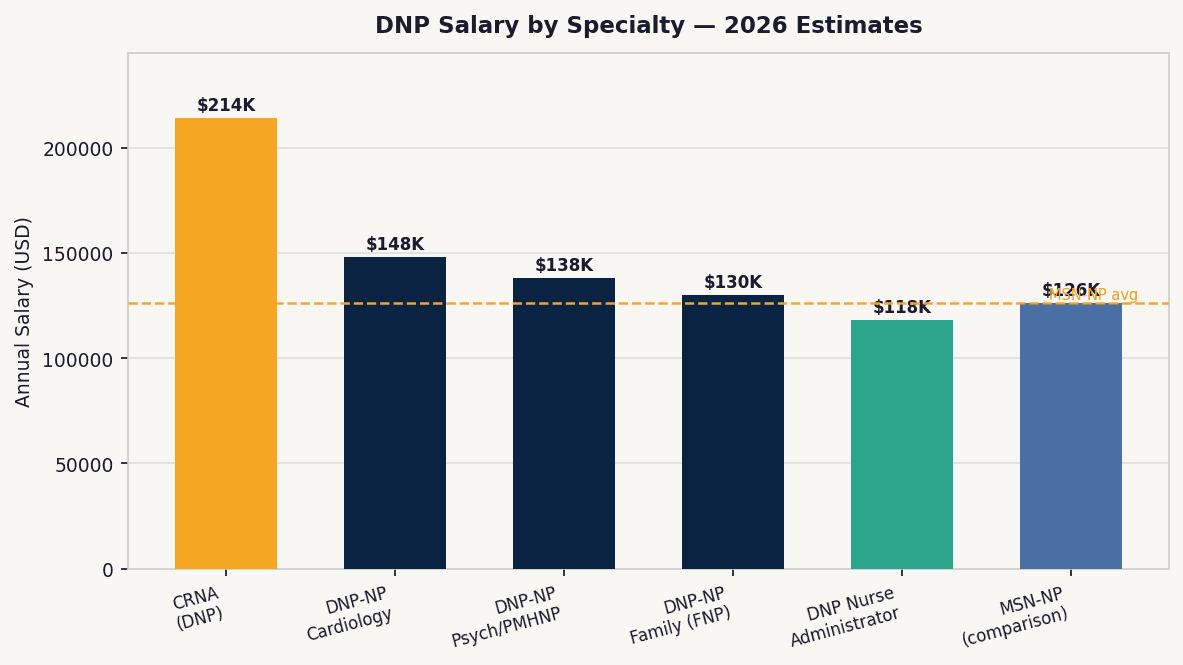
DNP Salary by Specialty (2026)
The widest salary range of any advanced practice credential runs through the DNP. Anesthesia sits in a category of its own. Outside of CRNA, cardiology NP and psychiatric-mental health NP positions offer the strongest compensation for doctoral-prepared clinicians.
DNP Salary by Specialty — 2026 Estimates
| DNP Role / Specialty | Avg Annual Salary | Avg Hourly Rate |
|---|---|---|
| DNP-CRNA (Anesthesia) | $214,000 | $102.88/hr |
| DNP-NP Cardiology | $148,000 | $71.15/hr |
| DNP-NP Psych / PMHNP | $138,000 | $66.35/hr |
| DNP-NP Family (FNP) | $130,000 | $62.50/hr |
| DNP Nurse Executive / CNO | $125,000 | $60.10/hr |
| DNP Nurse Educator (academic) | $118,000 | $56.73/hr |
| MSN-NP (comparison baseline) | $126,820 | $60.97/hr |
Source: BLS OEWS May 2024 (NP SOC 29-1171, CRNA SOC 29-1151) + NurseSalaryIntel 2026 estimates
DNP Salary by State
State salary averages for DNP nurses skew upward because CRNA compensation is included in the figure. California's average reflects the density of high-paying hospital CRNA positions. For DNP-NPs specifically (excluding anesthesia), the state spread is more consistent with general NP salary data.
DNP Nurse Average Salary by State
| State | Avg Annual Salary (all DNP roles) | Notes |
|---|---|---|
| California | $155,000+ | CRNA demand drives avg up |
| Massachusetts | $148,000 | $71.15/hr |
| Washington | $144,000 | $69.23/hr |
| New York | $140,000 | $67.31/hr |
| National Average (all DNP roles) | $130,000 | $62.50/hr |
| Texas | $122,000 | $58.65/hr |
| Florida | $118,000 | $56.73/hr |
Source: BLS OEWS May 2024 + NurseSalaryIntel 2026 estimates

Is the DNP Worth It? The Financial Reality
DNP programs cost $35,000–$55,000 on average (post-MSN programs run lower, post-BSN programs run higher). The clinical salary premium over an MSN-NP is $5,000–$15,000/year in most roles — meaning break-even is 4–8 years for the median program cost and premium. That math is modest unless you factor in the non-salary benefits: leadership eligibility, academic faculty positions, full practice authority in more settings, and CRNA program requirements.
DNP ROI Analysis
| Factor | Value | Notes |
|---|---|---|
| DNP program cost (avg) | $35,000–$55,000 | Post-MSN programs are lower |
| Annual salary premium over MSN-NP | $5,000–$15,000/yr | Clinical roles |
| Annual premium — academic / admin | $15,000–$25,000/yr | Leadership positions |
| Break-even (clinical premium) | 4–8 years | $10K/yr premium scenario |
| Break-even (leadership premium) | 2–3 years | $20K/yr premium scenario |
Source: AACN DNP data 2024 + NurseSalaryIntel salary analysis
DNP vs. MSN: When the Degree Pays Off Fastest
The DNP pays off fastest in three scenarios. First, CRNA: DNP is increasingly required by accreditation standards (ACNA) and the income starts at $190,000+. Second, nurse executive and CNO roles: hospitals increasingly require a doctoral degree for chief nursing officer positions, where the premium over MSN-prepared candidates is $15,000–$25,000/year. Third, academic positions at research universities: tenure-track faculty roles typically require a doctoral credential and pay $15,000–$25,000/year more than community college instructor positions.
For staff NPs in primary care or urgent care settings, the DNP adds credential credibility but the salary premium is modest. If your goal is clinical practice income maximization without administrative ambition, an MSN-NP with years of experience will often out-earn a new DNP grad.
DNP Salary Negotiation Tips
DNP-prepared nurses have measurable leverage: the degree signals leadership capability that many healthcare systems are willing to pay for. Key negotiation angles include the ability to supervise NP students (generates revenue for the practice), eligibility for CNO and director tracks (future-proofing for the employer), and reduced onboarding costs compared to a physician hire for equivalent scope. Raise these points explicitly — most HR departments will not volunteer the premium.
Related Salary Guides
CRNA Salary 2026
The top-earning DNP specialty
MSN Nurse Salary 2026
FNP, PMHNP, CNM — MSN vs. DNP pay comparison
PMHNP Salary 2026
Psychiatric NP pay breakdown
BSN to DNP Career Path
Full nursing career ladder
📊 Data Methodology
Salary figures on this page are 2026 estimates derived from the most recent available U.S. Bureau of Labor Statistics Occupational Employment and Wage Statistics (OEWS) data, based on the May 2024 survey and published in March 2025. Estimated ranges may also incorporate publicly available 2025 job postings, hospital pay schedules, regional market conditions, and reported compensation trends.
Official 2026 OEWS wage data has not yet been released. All salary figures on this page should be treated as informational estimates rather than official government statistics or guaranteed compensation rates.
Frequently Asked Questions
How much does a DNP make in 2026?
Does a DNP get paid more than an MSN?
Is a DNP worth it financially?
What is the highest paying DNP specialty?
Can a DNP be called a doctor?
How long does it take to earn a DNP?
Download your free nursing contract audit kit — scripts, checklists, and counter-offer language
- ✓ Word-for-word counter-offer emails for each red flag clause
- ✓ Scripts for negotiating with recruiters by phone
- ✓ Legal addendum language to modify bad clauses
- ✓ What to say if they push back or say "it's standard"
Instant access · Free · No credit card